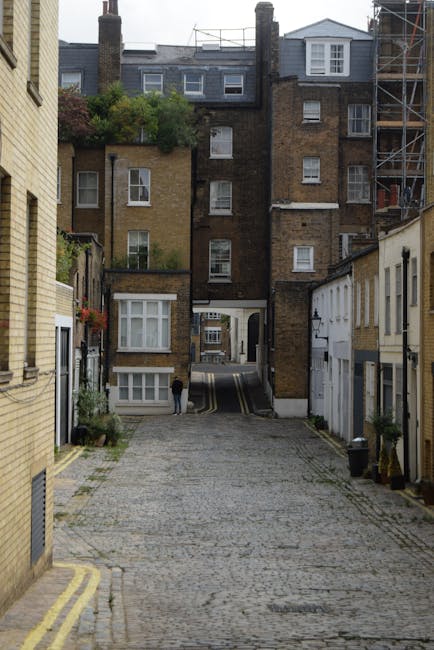
Fournier Street Spitalfields gardeners for narrow terrace care: practical help for tight urban gardens
If you live on or near Fournier Street, you already know the charm of a narrow terrace garden. It can be a lovely little slice of calm, but it can also feel awkward to care for. Borders are tight, access is fiddly, light is patchy, and every plant seems to want to lean into the neighbour's space. That is exactly why Fournier Street Spitalfields gardeners for narrow terrace care matter. The right approach turns a cramped outdoor strip into something usable, tidy, and genuinely enjoyable.
In this guide, we'll look at how terrace care works in practice, what services are most useful, where people usually go wrong, and how to make the most of a compact Spitalfields garden without overcomplicating it. You'll also find a step-by-step process, a comparison table, and a checklist you can actually use. No fluff. Just the stuff that helps.
To be fair, small gardens often need more thought than big ones. There's less room to hide mistakes.
If you want a broader view of professional support, it can help to start with the services overview or see how a regular garden maintenance service keeps compact spaces under control throughout the seasons.
Table of Contents
- Why Fournier Street Spitalfields gardeners for narrow terrace care Matters
- How Fournier Street Spitalfields gardeners for narrow terrace care Works
- Key Benefits and Practical Advantages
- Who This Is For and When It Makes Sense
- Step-by-Step Guidance
- Expert Tips for Better Results
- Common Mistakes to Avoid
- Tools, Resources and Recommendations
- Law, Compliance, Standards, or Best Practice
- Options, Methods, or Comparison Table
- Case Study or Real-World Example
- Practical Checklist
- Conclusion
- Frequently Asked Questions
Why Fournier Street Spitalfields gardeners for narrow terrace care Matters
Fournier Street and the wider Spitalfields area have a very particular kind of garden challenge. Many homes have narrow rear terraces, slim courtyard plots, or roof-adjacent outdoor spaces where every square metre has to work hard. You cannot treat these spaces like a suburban lawn. They need a different mindset.
Good narrow terrace care is about more than keeping things neat. It's about solving a set of small but frustrating problems: poor access, limited planting depth, shade from surrounding buildings, soil that dries out too quickly, and the simple fact that one overgrown shrub can dominate the whole space. A gardener who understands that will plan for scale, structure, and movement, not just colour.
That matters because a compact garden can either feel cramped and neglected or calm and intentional. The difference usually comes down to routine, plant choice, and careful pruning. In a dense London neighbourhood, that sort of care also helps keep paths usable, planting tidy, and shared boundaries respectful. You do not want a rosemary hedge becoming a minor diplomatic incident, frankly.
There's another point too. Small terraces can be surprisingly high-value spaces in everyday life. Morning coffee, a couple of herbs by the back step, a little greenery visible from the kitchen window - those details change how a home feels. The garden may be narrow, but its role is not small.
Expert takeaway: In compact Spitalfields terraces, the goal is not to squeeze in more plants. The goal is to make the space breathe, stay usable, and look intentional across the seasons.
How Fournier Street Spitalfields gardeners for narrow terrace care Works
Proper terrace care usually starts with a walk-through. A good gardener will look at access points, light levels, drainage, existing planting, storage, paving condition, and anything that may be crowding the space. Then comes a plan. For a narrow garden, that plan tends to be more surgical than dramatic.
Here's what the work often includes:
- Clearing and reducing clutter so the space becomes easier to move through.
- Selective pruning to stop plants from leaning, blocking light, or hanging into paths.
- Container and bed refreshes for shallow-rooted planting that suits compact plots.
- Soil improvement where beds have become tired or compacted.
- Routine maintenance visits to keep growth balanced rather than letting it surge and then cutting it hard.
- Seasonal swaps where summer and winter interest need to be adjusted.
In tight terraces, small decisions matter. A climber trained neatly up a wall can free floor space. A leggy shrub cut back properly can improve light to the whole garden. Even the choice of pot shape changes how you move through the area. Round pots in a narrow run? Sometimes they're just in the way, lovely as they may be.
Many homeowners also want a garden that feels more private without becoming blocked off. That is where layered planting, taller pots, and structured screening can help. If that is part of your goal, it may be worth looking at ideas from the privacy planting guide, especially if your terrace is overlooked.
For neglected spaces, the process can begin with a larger reset. In those cases, garden clearance may be the first sensible move before maintenance can begin properly. Sometimes you need to clear the path before you can improve it.
Key Benefits and Practical Advantages
A well-cared-for narrow terrace does more than look tidy. The benefits are practical, visual, and, honestly, a bit emotional too. You feel better using a space that works.
- Better use of limited space - A narrow terrace can become functional rather than just decorative.
- Improved light and airflow - Careful pruning and layout choices stop the space from feeling boxed in.
- Less ongoing stress - Routine maintenance avoids the panic of a sudden jungle situation in July.
- Healthier plants - The right care reduces overwatering, overcrowding, and weak growth.
- Cleaner boundaries - Neater edges and disciplined planting are especially useful in terrace settings.
- More enjoyment - A garden that is easy to enter, water, and sit in gets used more often.
There is also a subtle but important design benefit: small gardens can look more expensive when they are well maintained. That doesn't mean flashy. It means intentional. A straight edge, a healthy climber, a few strong containers, and no random sprawl. Simple, but not simplistic.
For properties that need bigger structural changes, combining routine care with landscape gardening can be a sensible long-term option. If your terrace has awkward paving, an unhelpful layout, or a tired back wall, the improvement may need both maintenance and redesign. That's often how the best results happen in real life.
Who This Is For and When It Makes Sense
This kind of gardening support suits a few types of people in particular. You may recognise yourself in one of these:
- Busy homeowners who want the garden to look cared for without spending every weekend on it.
- Landlords and property managers who need narrow outdoor areas kept presentable between tenancies.
- Residents with shaded terraces where plant choice and maintenance need more care than average.
- People with mature planting that has become too large for the space.
- Anyone who wants privacy, not clutter in an overlooked terrace.
It also makes sense if you've noticed the same issues repeating: weeds coming back quickly, containers drying out, shrubs dropping debris, or the garden just feeling a bit defeated. Maybe it looks fine from one angle but messy from another. That is a classic narrow terrace problem.
Sometimes the right question is not "Do I need a gardener?" but "Do I need a gardener who understands small-space rhythm?" That difference matters more than most people think.
If your terrace is already fairly tidy, a lighter-touch visit focused on lawn mowing is less relevant than edge work, container care, pruning, and bed control. In compact urban gardens, maintenance often looks different from the standard suburban checklist.
Step-by-Step Guidance
If you're trying to improve a narrow terrace in Spitalfields, a sensible process keeps things manageable. Here's a practical version that works well in most real-world spaces.
1. Start with a clear assessment
Look at what the garden is doing now, not what you wish it was doing. Which parts get morning light? Which stay damp? What's blocking movement? What is healthy, and what is just hanging on?
This first look should include the route from the house to the back of the garden. In small terraces, the walkway often matters as much as the planting.
2. Remove obvious clutter and dead growth
Dead stems, cracked pots, broken canes, and forgotten plant labels may sound minor, but they all make a narrow garden feel smaller. Removing them gives you breathing room immediately. You will notice it straight away, especially in the morning when the light is low and everything is a bit sharper.
3. Decide what to keep, reduce, or replace
Be honest. Some plants earn their place. Others don't. If a shrub is too wide, too woody, or too high-maintenance for the space, it may be better to reduce it or replace it with something better suited. Narrow terraces reward restraint.
4. Improve the soil where needed
Container soil and shallow borders can become tired quite fast. Refreshing compost, checking drainage, and top-dressing beds can make a big difference. In small gardens, weak soil shows up quickly because there is nowhere for plants to hide.
5. Rework structure before adding colour
First sort the shape of the space. Then add seasonal interest. A narrow terrace usually benefits from a few strong structural choices rather than lots of tiny decorative ones. Think trained climbers, slim planters, and one or two focal plants.
6. Set a maintenance rhythm
This is the bit people often skip. A narrow terrace doesn't need one heroic makeover and then nothing for six months. It needs lighter, regular care. Monthly or seasonal visits can be far more effective than a once-a-year blitz.
If the garden has decking, don't forget the surface itself. Wet London weather, leaf fall, and foot traffic can all make decking slippery or tired-looking. For that, a service like decking services can support the wider maintenance plan, especially if the terrace is used often.
Expert Tips for Better Results
Here's where the small details start to pay off. In our experience, these are the things that make a narrow terrace feel more generous.
- Use vertical space wisely. Walls, trellises, and slim supports help plants grow up rather than out.
- Choose repeated shapes. A few matching pots often look calmer than a mix of random sizes and styles.
- Prioritise one clean route through the garden. If you can move through the space easily, it instantly feels bigger.
- Keep pruning light and regular. Small cuts are easier to manage than hard recovery work.
- Match plants to the light, not the mood. That lovely sun-loving plant may look perfect in the shop and fail miserably in the garden. Happens all the time.
- Think in layers. Low planting, mid-height structure, and one taller element can create depth without crowding the terrace.
Another useful habit is to step back often. Literally. Stand at the kitchen door, then halfway down the garden, then at the far end if you can. Narrow terraces can trick the eye, and a small adjustment from one angle can improve the whole space.
It also helps to be realistic about maintenance time. If you know you will not water every day in summer, choose plants that forgive the odd lapse. That is not laziness. That is sensible gardening.
Common Mistakes to Avoid
A lot of terrace problems come from trying to do too much. The garden gets overloaded, then maintenance becomes harder, and soon enough everything is either crowded or cut back too severely. A familiar story, honestly.
- Overplanting the space - Too many varieties make a narrow garden look busy and smaller than it is.
- Ignoring access - If you can't reach the back bed or move around safely, maintenance becomes a chore.
- Choosing plants without checking mature size - Small plants in a pot can become huge by the second season.
- Using the wrong containers - Very wide or heavy pots can block routes and make watering awkward.
- Letting climbers run wild - A climber needs guidance, not blind encouragement.
- Waiting too long between visits - In a compact space, one season of neglect is enough to create a big job.
Another subtle mistake is treating the terrace like a display area only. It should also be practical. Can you open the door fully? Can you water without splashing the paving? Can you get to the bins, the storage box, or the seating area without stepping around obstacles? Those things sound small until they start annoying you every day.
If your current setup has been built up over years, a maintenance review may be more useful than a complete redesign. Sometimes the fix is not dramatic. Sometimes it is just a better layout and some discipline.
Tools, Resources and Recommendations
For narrow terrace care, the best tools are usually the ones that help you work neatly in tight conditions. There's no need for a shed full of gadgets. A few well-chosen items will do most of the work.
| Tool or resource | Why it helps | Best use in a narrow terrace |
|---|---|---|
| Hand pruners | Precise cuts without damaging nearby growth | Trimming stems, deadheading, shaping shrubs |
| Long-handled snips | Reach without leaning over beds too much | Climbers, hanging growth, awkward corners |
| Compact watering can or hose attachment | Controlled watering in small spaces | Containers and narrow beds |
| Lightweight compost and mulch | Improves soil and moisture retention | Refreshing tired pots and borders |
| Vertical supports | Helps create height without using floor space | Trellises, wall-trained plants, screening |
| Professional maintenance plan | Keeps growth under control across the year | Regular pruning, tidy-up visits, seasonal adjustments |
For larger clean-ups, a professional team may also recommend hedge trimming or targeted cutting back if boundary plants are becoming dominant. In a terrace, the edges matter almost as much as the centre.
And if the whole outside area needs a reset, the broader landscaping service can be useful where structure, surfaces, and planting all need attention together. Not every garden needs that level of work, but some do.
Law, Compliance, Standards, or Best Practice
For most domestic terrace gardens, the main issue is not legal complexity. It is good practice, neighbour awareness, and safe working. That said, there are a few sensible points to keep in mind in London settings.
First, access and safety matter. If work involves ladders, power tools, or removing larger branches, the gardener should follow appropriate safety procedures and use suitable equipment. This is especially relevant where space is tight and surfaces can be uneven or wet. A professional outfit should also be clear about insurance and working practices. If you want to understand that side better, the site's insurance and safety information is the sort of thing you'd expect a responsible provider to make available.
Second, be considerate with waste, noise, and shared boundaries. Narrow terraces often sit close to neighbouring properties, so tidy handling of cuttings and sensible working hours are part of being a good neighbour. Nothing dramatic. Just basic courtesy, really.
Third, if pruning or clearance affects trees, walls, or anything close to boundaries, it is wise to check carefully before proceeding. Tree work in particular can need a more cautious approach. For more substantial woody growth, a service such as tree lopping and removal may be more appropriate than a standard maintenance visit.
Best practice also includes recycling green waste where possible and using materials responsibly. If sustainability matters to you, the company's recycling and sustainability approach is worth reviewing, because small gardens can still generate surprising amounts of cuttings and packaging over time.
Options, Methods, or Comparison Table
Not every narrow terrace needs the same kind of care. Some need regular upkeep, some need a reset, and some need a combination of maintenance and light redesign. Here's a simple comparison to help you decide what fits.
| Approach | Best for | Pros | Limitations |
|---|---|---|---|
| Regular maintenance | Gardens that are already in reasonable shape | Keeps the space tidy, predictable, and healthy | May not solve deeper layout issues |
| Seasonal tidy-ups | Spaces that only become messy at certain times of year | Lower commitment, useful for spring and autumn resets | Growth can run away between visits |
| Clearance plus replanting | Overgrown or neglected terraces | Creates a clean slate and better structure | More work upfront, needs planning |
| Combined maintenance and landscaping | Gardens with layout or surface issues | Best long-term transformation potential | Usually the most involved option |
If you're unsure, ask yourself a simple question: is the problem mainly upkeep, or is the garden fundamentally awkward? That answer usually points you in the right direction. Sometimes both are true. No big drama. Just reality.
Case Study or Real-World Example
Take a typical Spitalfields terrace with a narrow rear run of paving, a small raised bed, and a couple of containers squeezed near the back wall. The space looked fine in winter, but by late spring it had started to feel cluttered. A jasmine climber had pushed outwards, one shrub had become too tall for the wall, and the pots were scattered rather than arranged. The owners still used the garden, but only a little. It felt more like a corridor than a room.
The practical fix was not a full redesign. The gardener reduced the shrub carefully, retrained the climber, cleared out old pots, refreshed the tired soil, and introduced a slimmer layout with fewer but stronger planting choices. A narrow stepping route was kept clear all the way through. The result was modest in the best sense: calmer, brighter, easier to use.
What changed most was not just the look. It was the habit. Because the space was easier to maintain, it stayed tidy. That's the bit people often miss. A good solution in a terrace garden should reduce future effort, not just impress on day one.
In a busy London week, that matters. You come home, open the back door, and the space looks ready for a cup of tea instead of another job.
Practical Checklist
Use this before booking work or planning your own maintenance. It keeps the job focused.
- Check the garden's light levels at different times of day.
- Measure the narrowest access points and walkways.
- List plants that are healthy, overgrown, or poorly placed.
- Look for drainage issues, pooling, or constantly dry spots.
- Decide whether the space needs routine care, clearance, or redesign.
- Note any privacy issues with overlooking or exposed boundaries.
- Identify containers that are too large, too small, or damaged.
- Confirm whether climbing plants need supports or retraining.
- Set a realistic maintenance rhythm for the year.
- Ask about safety, waste removal, and insurance before work begins.
Quick summary: if the space is narrow, the plan should be narrow too - focused, tidy, and deliberate. That's the whole trick, really.
Conclusion
Fournier Street Spitalfields gardeners for narrow terrace care bring something very specific to the table: the ability to make tight urban outdoor spaces feel calm, usable, and well judged. In a small terrace, every choice is visible. Every pruning cut, every pot, every plant selection. That can feel unforgiving, but it also means improvement shows quickly.
The best results usually come from a mix of regular care, sensible structure, and plant choices that suit the reality of the space rather than an idealised version of it. Keep the route open. Keep the edges neat. Choose plants that can cope. And don't let the garden become a project that only grows larger in your head. Small spaces do best with steady, thoughtful attention.
If you're ready to improve a compact Spitalfields terrace, start with the service details, compare your options carefully, and choose the kind of support that fits how you actually live. That's the point, after all - not a perfect garden, just one that feels good every time you step outside.
Get a free quote today and see how much you can save.
Frequently Asked Questions
What do Fournier Street Spitalfields gardeners for narrow terrace care actually do?
They focus on the specific needs of compact terrace gardens: pruning, tidying, plant care, soil refreshes, container management, and keeping narrow access routes clear. The work is usually more precise than in a larger garden.
How often does a narrow terrace garden need maintenance?
That depends on the planting, light, and how fast things grow, but many compact gardens benefit from regular seasonal visits or lighter monthly care. In a busy urban setting, leaving it too long often leads to bigger catch-up work later.
Is a narrow terrace harder to maintain than a bigger garden?
Often, yes. There is less space to work in, fewer layout options, and small issues become visible very quickly. The upside is that well-planned maintenance can have a big impact quite fast.
What plants work best in a small Spitalfields terrace?
Plants that suit the light and stay within bounds tend to work best. Climbers, compact shrubs, herbs, and selected container plants are often practical choices, especially when they are matched to the available sun or shade.
Can a narrow terrace still have privacy without feeling blocked?
Yes. Layered planting, slim screening, trained climbers, and taller pots can improve privacy without crowding the space. The aim is to soften sightlines rather than build a solid wall of foliage.
Do I need clearance before maintenance starts?
If the space is heavily overgrown, cluttered, or difficult to access, then yes, a clearance step can make sense before routine care begins. It gives the gardener room to work and helps the long-term plan make sense.
What is the biggest mistake people make with terrace gardens?
Overplanting. People often buy too much at once, then the garden becomes cramped and harder to maintain. A narrow terrace usually looks better with fewer, better-chosen plants.
Are decking areas included in terrace care?
They can be. Decking often needs cleaning, checking, and general upkeep as part of the wider garden plan. If the surface is slippery or weathered, it should not be ignored just because the planting looks fine.
How do I know whether I need maintenance or landscaping?
If the garden is basically sound but untidy, maintenance is probably enough. If the layout, surfaces, or structure are part of the problem, landscaping may be more appropriate. Sometimes a mix of both works best.
Is waste removal included when gardeners work on small terraces?
It depends on the service agreement, so it is best to ask before work starts. In narrow gardens, cuttings and old material can build up quickly, so waste handling is worth clarifying early.
Do I need to worry about safety or insurance?
Yes, especially if the work involves tools, ladders, or larger branches. A professional provider should be clear about safety procedures and insurance. That's just sensible, and it protects everyone involved.
What should I prepare before booking a visit?
It helps to note your priorities, take a quick look at access, and decide whether you want regular care, a tidy-up, or a more involved reset. If you can explain what bothers you most, the gardener can usually give better advice straight away.